The teardown
P2 · INSIDE
Ohhh — THAT'S how a rocket works
The whole rocket, blown apart — 5 parts pinned ↓

1
2
3
4
5
🔍 SPOT IT — name each pin before you read the labels
1
Fairing
nose-cone shield
2
Payload
the satellites
3
Interstage
joint that drops a stage
4
Stage
a propellant section
5
Engine
makes the thrust
How does it go up?
PROPELLANT→
COMBUSTION→
HOT GAS→
NOZZLE→
THRUST ↑
↑ROCKET
↓HOT GAS
Newton's 3rd law — gas shoots down, so the rocket is pushed up.
Why drop a stage?
PROPELLANT BURNS→
EMPTY STAGE = DEAD WEIGHT→
DROP IT→
LIGHTER & FASTER ↑
Hauling empty stages wastes thrust — so the rocket sheds them mid-flight. That's why it's built in stages. (P1 answer: most of a rocket is propellant.)
Think like an engineer
Don't carry what you don't need — every kilo of dead weight is speed you lose.
🗣 Explain it (homework)
In ONE sentence, tell someone why a rocket drops its stages.
techsight.co after Wikipedia
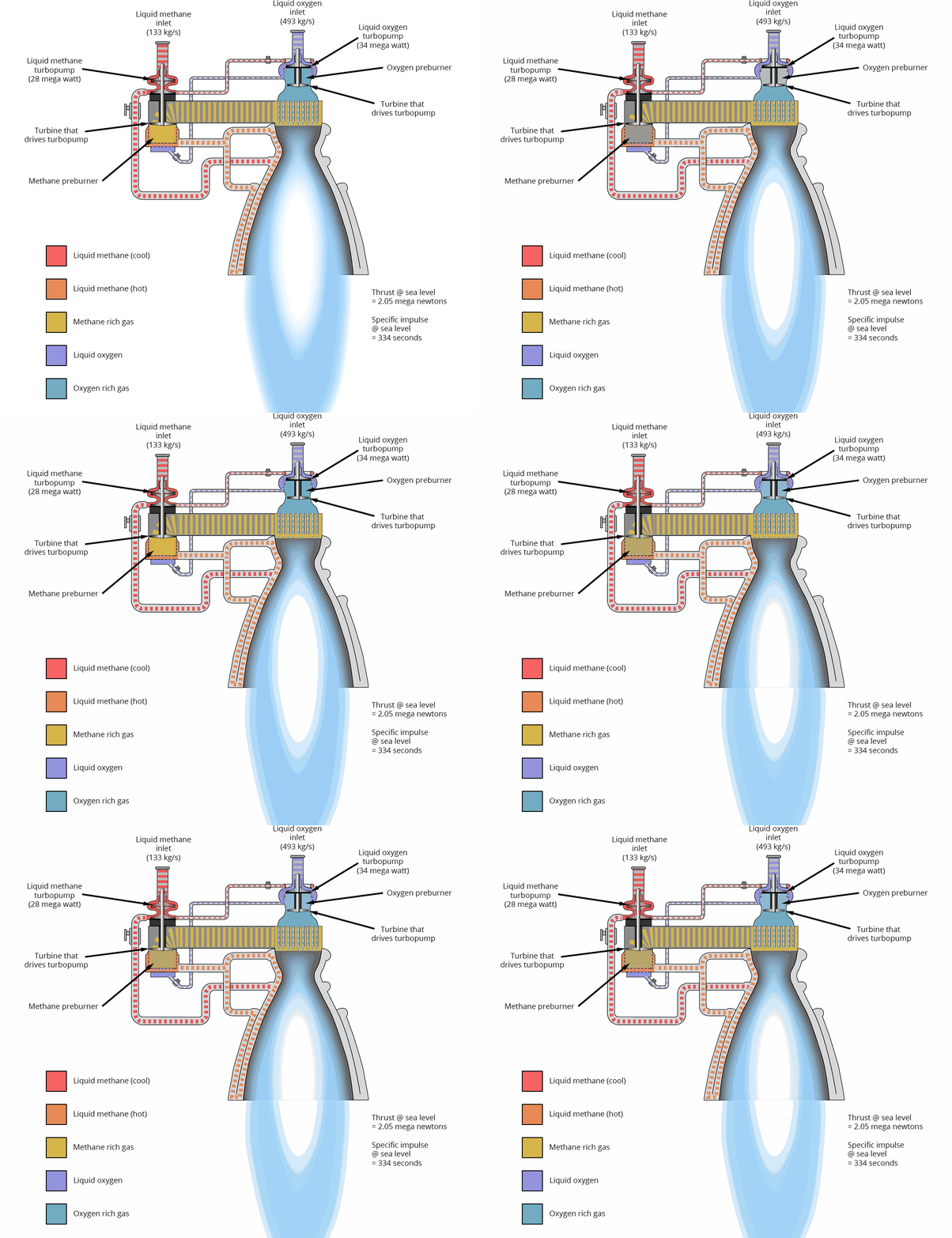
Peek inside — before you turn
One engine. Every pipe labelled.
This is a real engine drawing. It looks impossible — until you stop reading it as
pipes and start following the route the propellant takes:
TANKS→
TURBOPUMPS→
PREBURNERS→
CHAMBER→
NOZZLE ↓
Same five boxes as the flow above — drawn by an engineer, not a teacher.
It drinks
626 kg/sa car's full fuel tank every 1/15th of a second
Pump power
62 MWtwo turbopumps — a small town's worth
Thrust
2,050 kNat sea level
Vikram-1's Raman-1
3.4 kN4 tiny 3D-printed engines, up top
WAIT — the engine makes ALL the thrust… so what's actually inside it?
NEXT → let's open the engine 🔧

SCAN →
WATCH IT FLY
Skyroot's own
launch film
WATCH IT FLY
Skyroot's own
launch film
Data: Skyroot Aerospace / ISRO / SpaceX / public sources · diagrams for educationP2 / 4